Every Crucible school runs on The Forge — the platform where students hand in real work, peers and guides seal it, families see the record, and the room sees itself. Not a lesson player. Not a gradebook. The working floor of a school built for formation.
Built by The Crucible Institute. Running live in partner schools today.
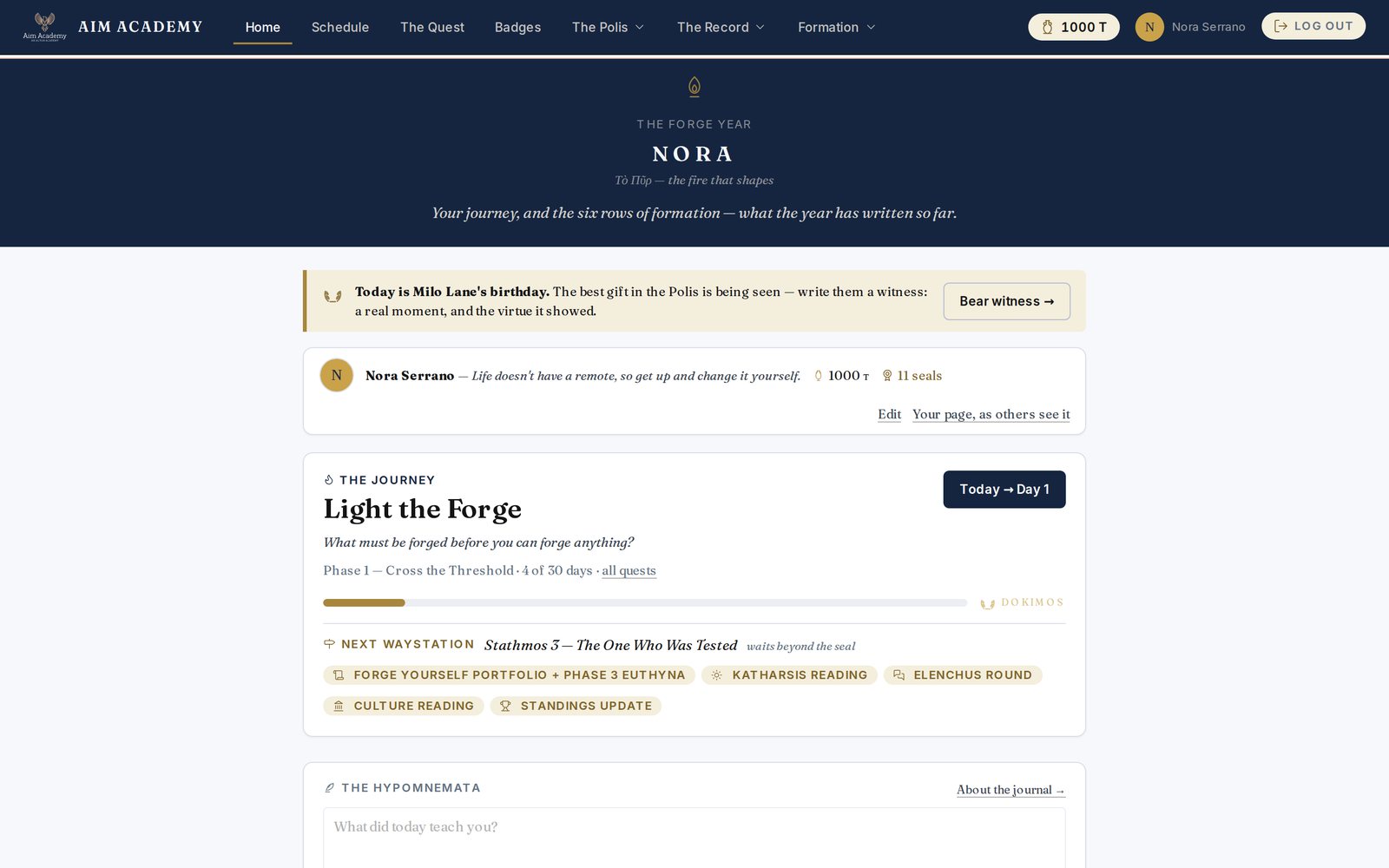
Students in a Crucible school are called citizens. Their home page is not a to-do list. It is the year so far: the quest they are walking, the next waystation, the journal that is private even from the guide, the promise they made out loud, and the six rows of the record.
Every quest is a road with waystations. The page shows the phase, the day, the next waystation, and what it will take to pass it. The Hypomnemata — the daily journal — sits right underneath, and it stays sealed unless the student chooses to offer it.

What the student sees first. The quest, the next waystation, a private journal, and the year's record — no points, no due dates.
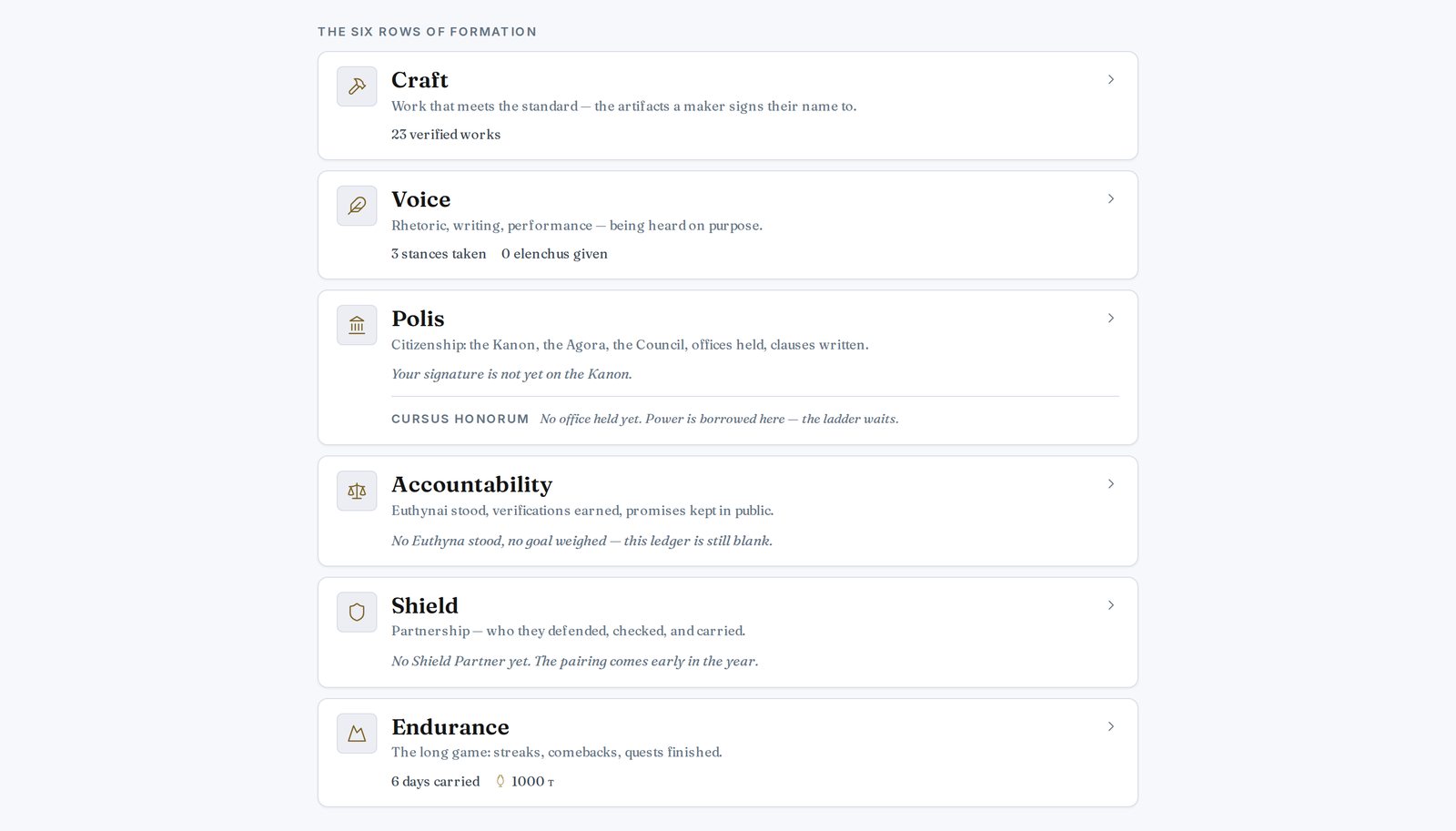
Craft. Voice. Polis. Accountability. Shield. Endurance. Six rows, and every line in them was earned, witnessed, and sealed: verified works, stances taken in debate, offices held, audits stood, partners defended, days carried. It is the report card of a school that measures formation instead of compliance.

Six rows, no grades. Each row fills only when something real happened — and someone else saw it.
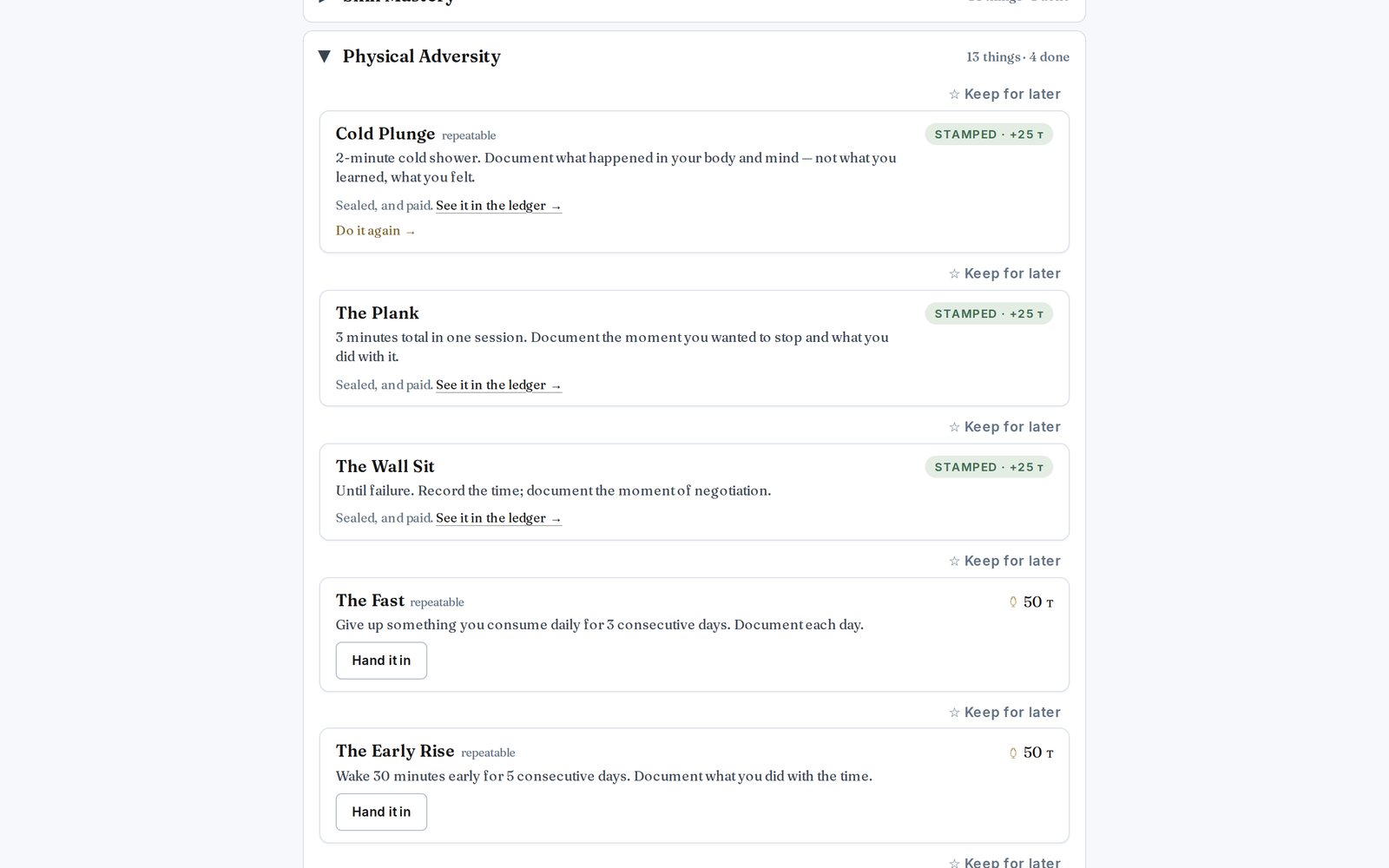
The forge inside a quest holds hundreds of challenges across twelve categories — physical adversity, public vulnerability, explicit failure, external service, moral dilemmas, and more. Nothing is assigned. The student picks, does the thing, documents it, and hands it in. Items that require gathering other people pay more.

Hand it in, get it sealed, get paid. A sealed challenge shows what it paid; an open one shows only the button.

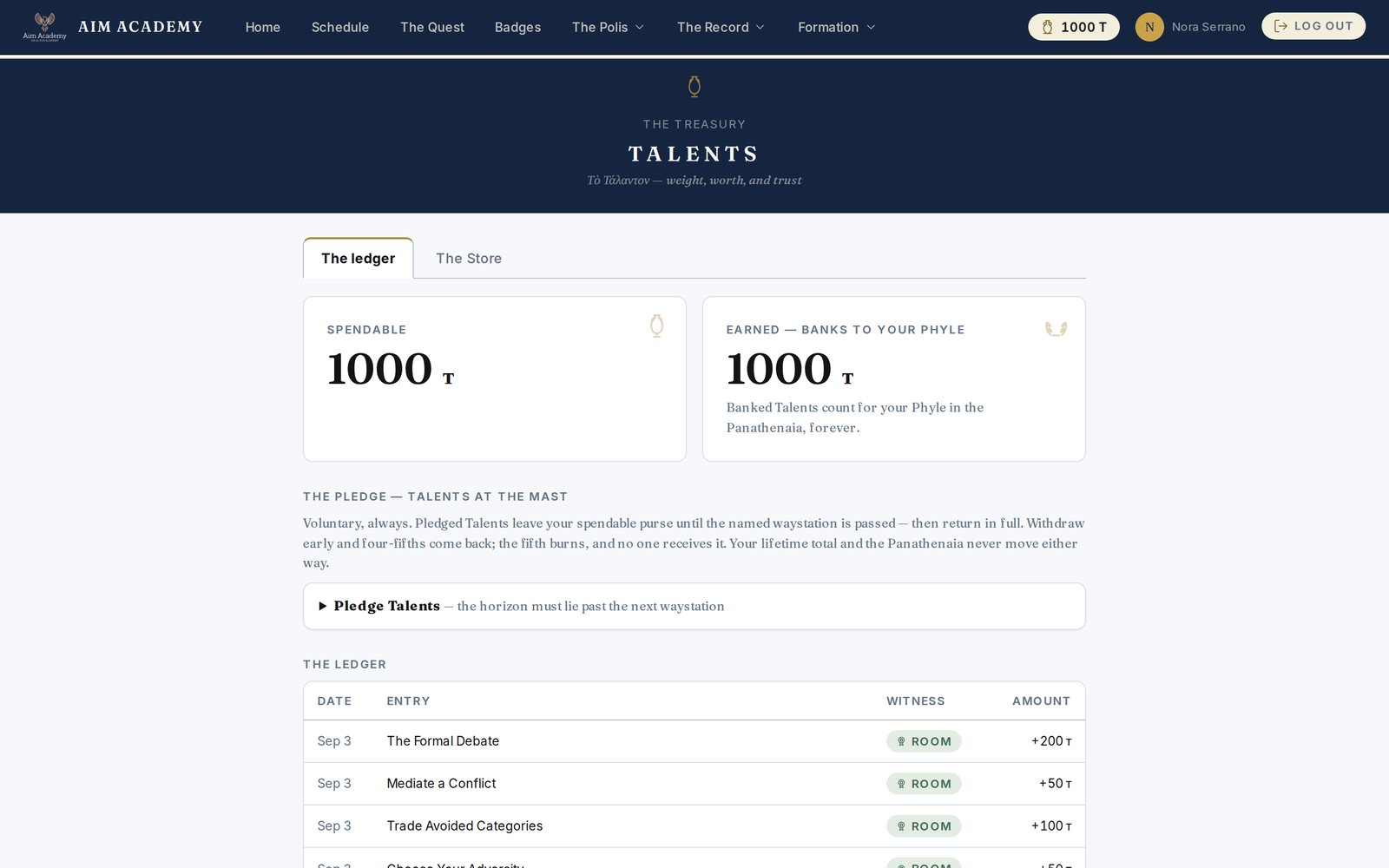
The Treasury. One currency — the Talent — with a ledger that names who witnessed each entry. Pledged Talents burn if the promise breaks.

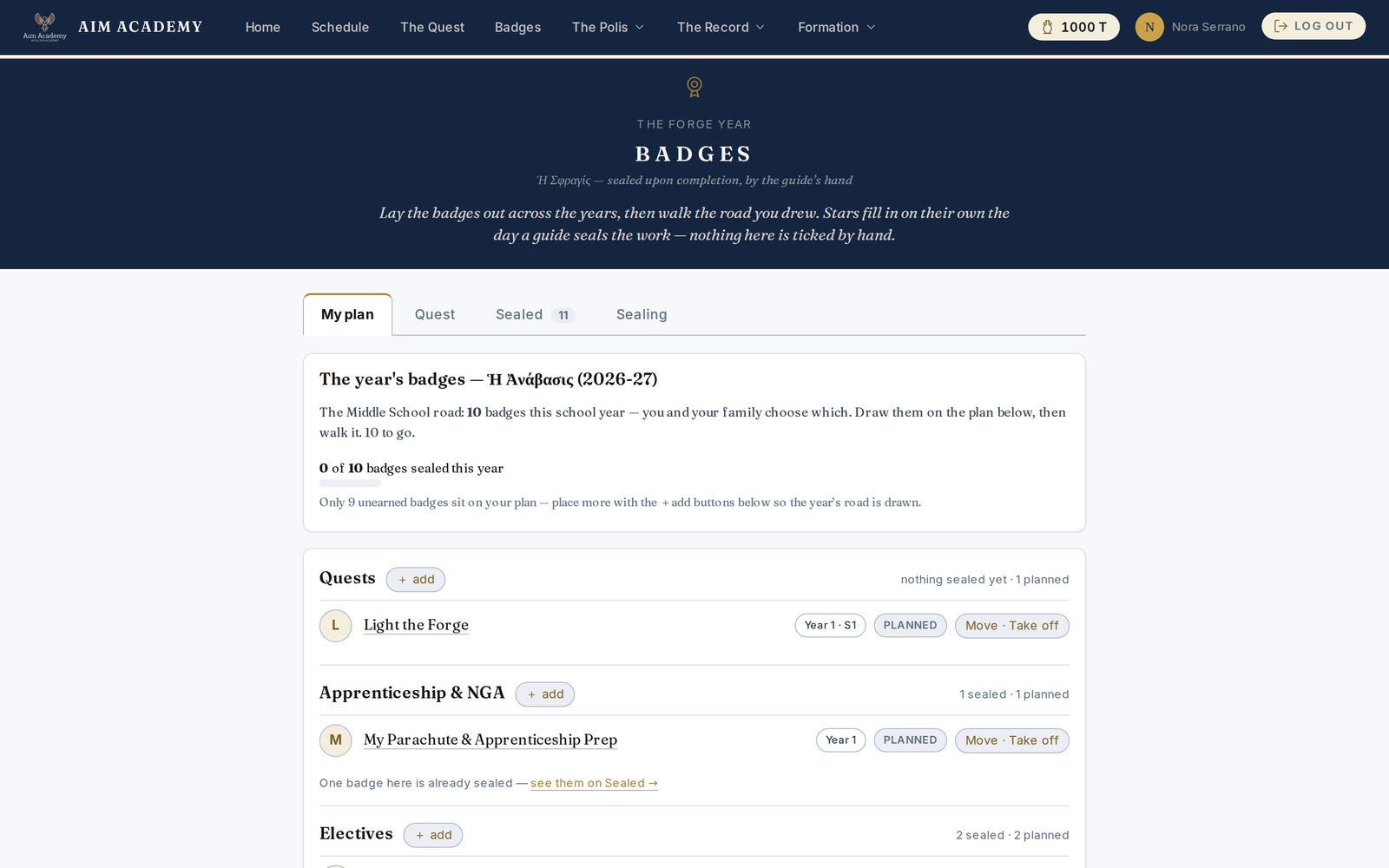
The badge plan. The family draws the year's road; stars fill in on their own the day a guide seals the work.
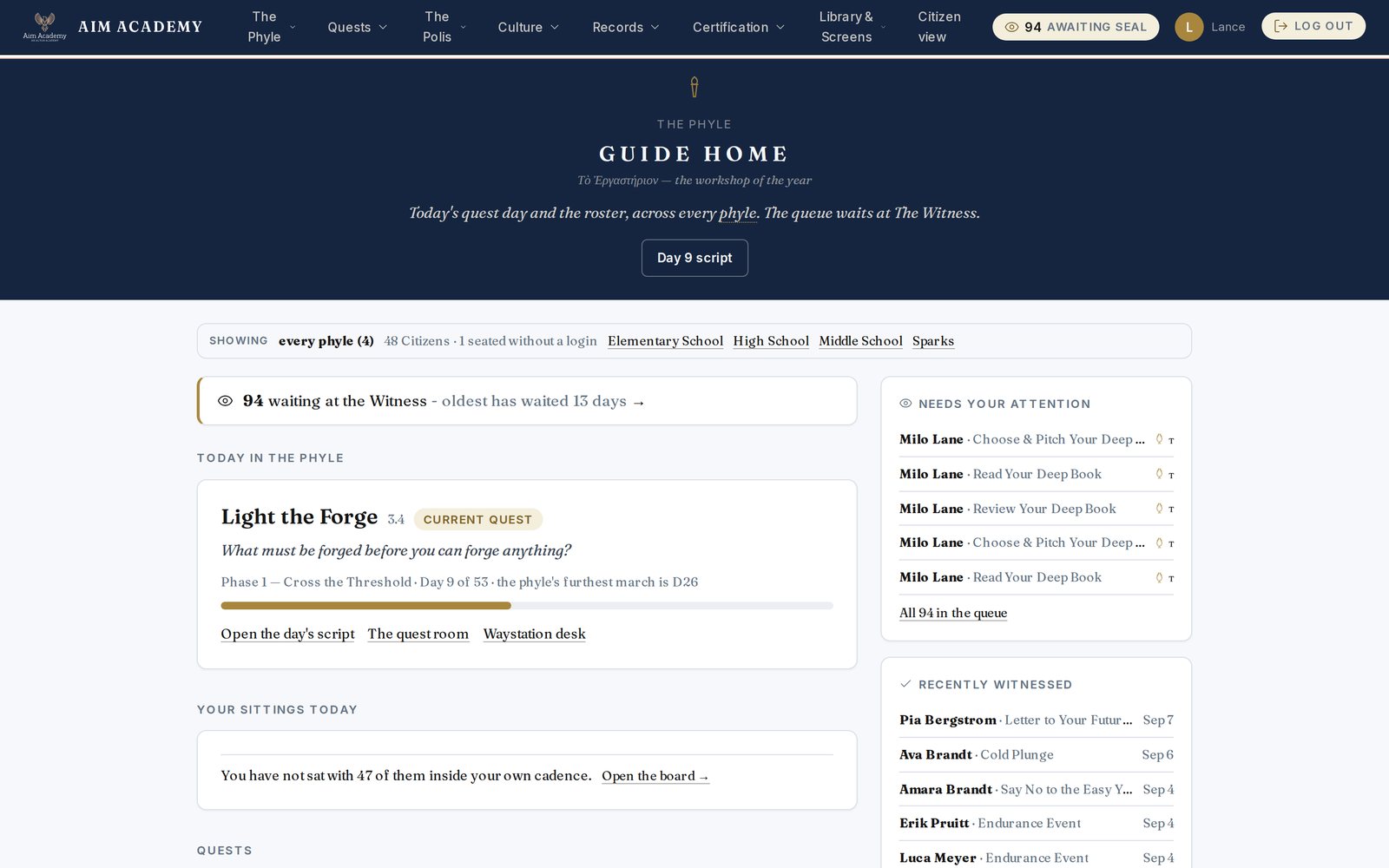
Crucible teachers are guides. Their home page carries today's quest day, the queue of work waiting to be witnessed, the one-on-one sittings owed, and the roster with every citizen's position and purse. The guide is asked for one thing only: the seal.
What day of the quest is it, what needs a witness, who has not sat with the guide lately, and where every citizen stands — on one screen. The day's script opens from here, and the quest room and waystation desk are one click away.

The guide's desk. Today in the phyle, the Witness queue, sittings owed, and every citizen's position.
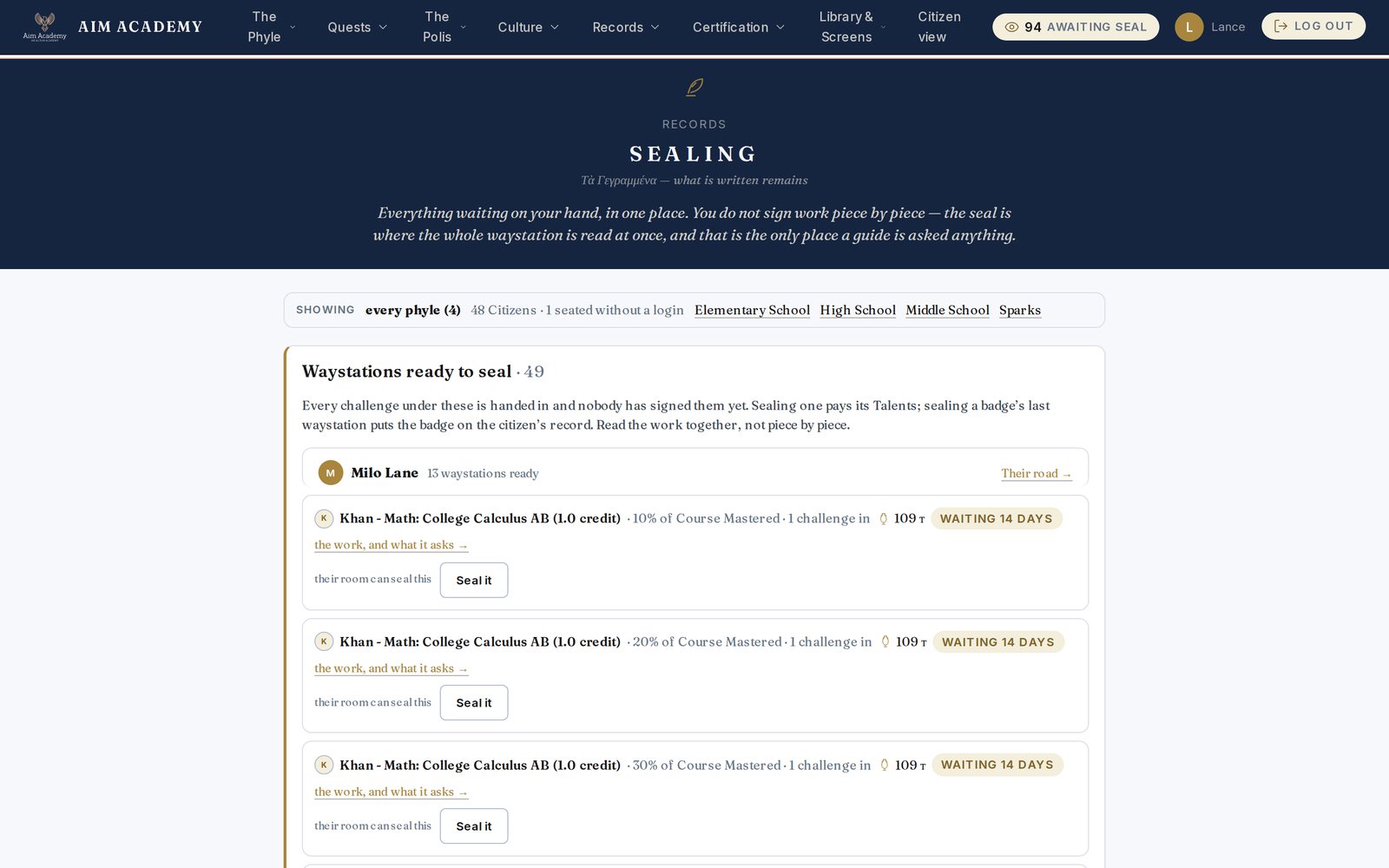
A guide does not sign work item by item. When every challenge under a waystation is handed in, the whole waystation is read at once and sealed — that is the audit, and it is the only place a guide is asked anything. Sealing pays the Talents; sealing a badge's last waystation puts the badge on the record.

Waystations ready to seal. Everything waiting on the guide's hand, in one place, with how long it has waited.
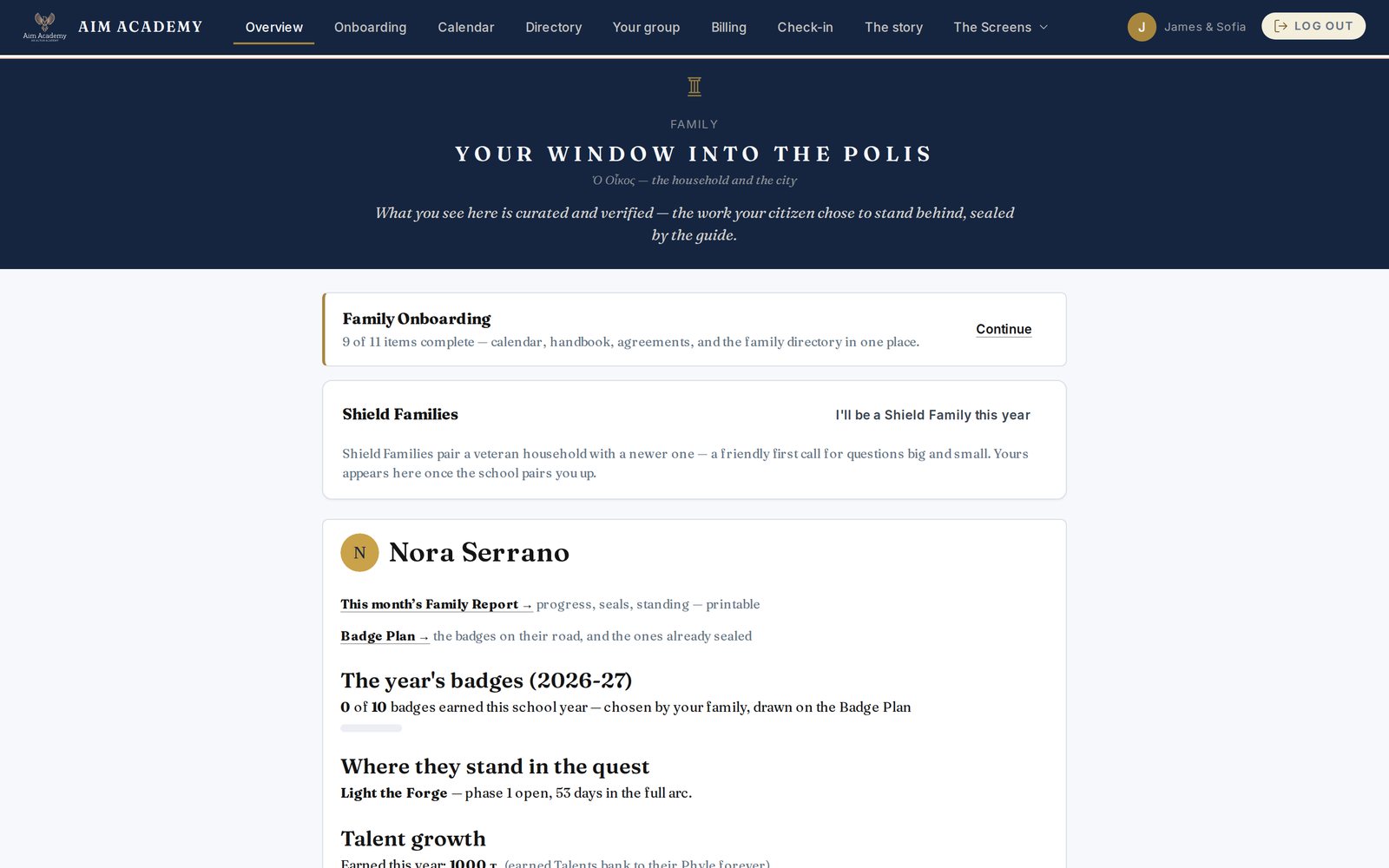
A family's window shows what their citizen chose to stand behind and what the guide sealed — the year's badges, where they stand in the quest, the Talents earned, and a monthly Family Report written in plain language.

Your window into the polis. Onboarding, the family directory, the badge plan, and the record — curated and verified.

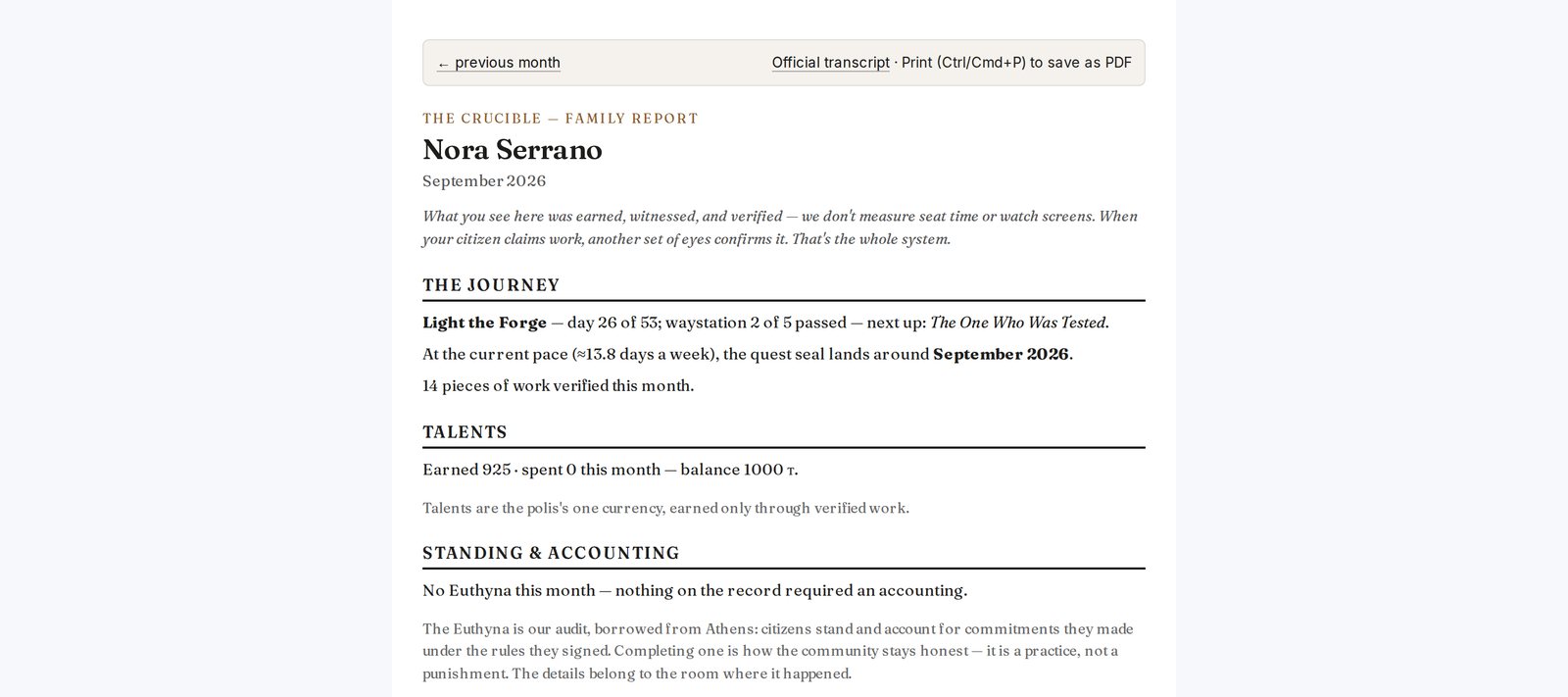
The monthly Family Report. Earned, witnessed, verified — printable as an official transcript.
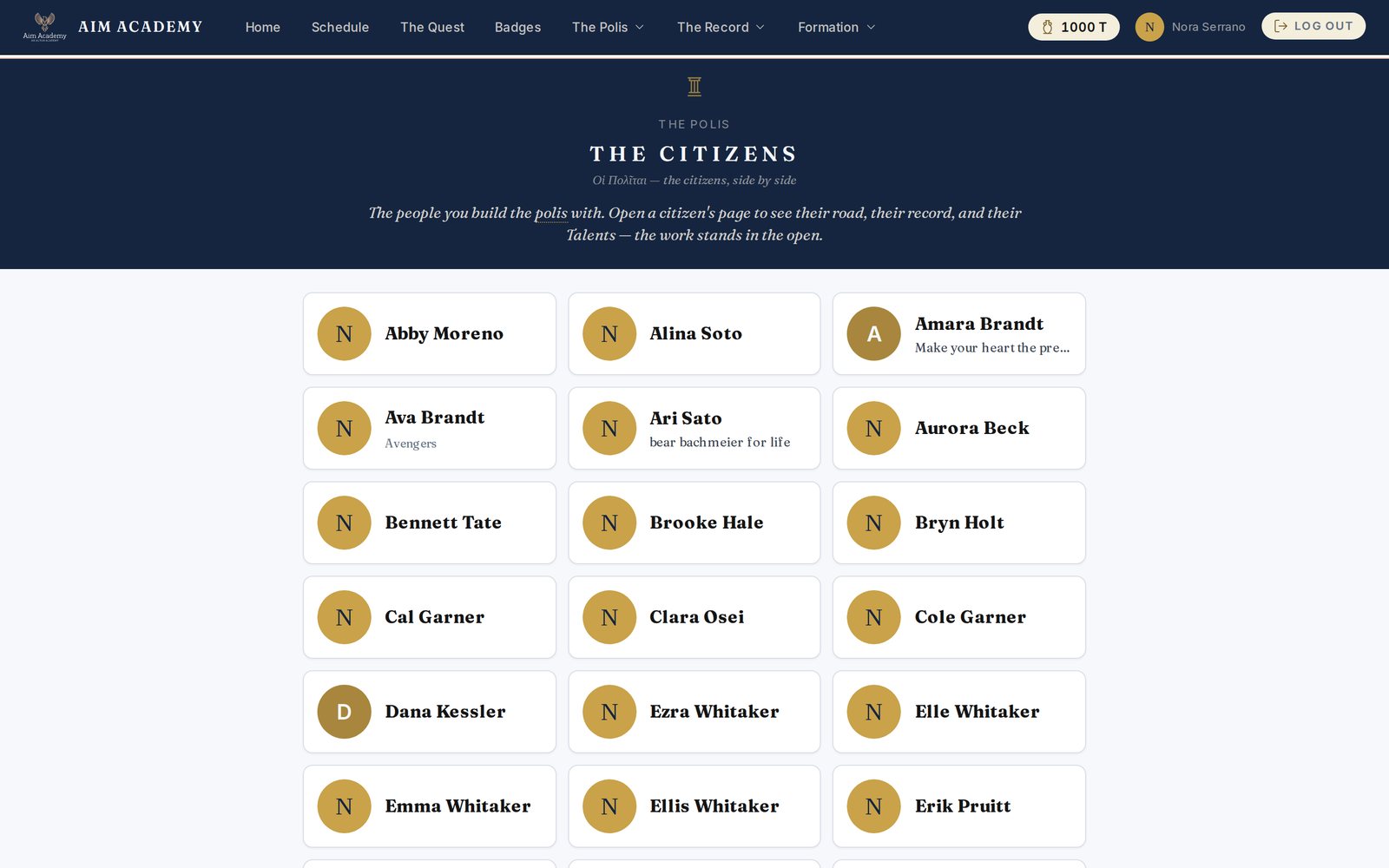
Every citizen has a public page — their road, their record, their Talents — as others see it. Tribes race for the Panathenaia on Talents earned. Offices are held and returned. The code the citizens write is the code they are audited against. And three wall screens in the building show the room to itself — aggregates only, never one child on the wall.

The Citizens. Open a citizen's page to see their road, their record, and their Talents — the work stands in the open.
There are no points for seat time, no due-date grid, no percentages. A row on the record fills only when work was handed in and sealed.
Quests are run in the room by a certified guide. The Forge carries the day's script, the work, and the record — it does not replace the room.
The journal is private even from the guide. The wall screens show the polis, never a single child. Families see what their citizen chose to stand behind.
The screens on this page are from a live partner school in the 2026–27 school year. Student and family names and photos have been changed. Each partner school runs The Forge under its own name and colors.
Twenty minutes, live, with the founder driving. Lance Stewart · lance.stewart@thecrucibleinstitute.com · 801-390-3803
Schedule a Conversation